Digital Twinning:
Read the full Digital Twinning eBook:
By Michael Parks, PE, for Mouser Electronics
Good systems engineering tells us that abstraction and hierarchy are two ways to manage the complexity of design
when dealing with systems composed of multiple layers of subsystems, assemblies, subassemblies, and so forth. By
breaking down complex systems into constituent parts, we can more easily understand the first principles of
operation. By taking the lowest level parts and putting them back together, you can build sophisticated yet
comprehensible systems.
Digital twins (DTs) work in a similar bottom-up way, where the lowest level is the simplest and yields limited
information, with each additional level providing more sophisticated and more diverse types of information. This
concept is at the core of an emerging hierarchy of the DT, which includes:
Parts twinning
Product twinning
System twinning
Process twinning
Parts Twinning
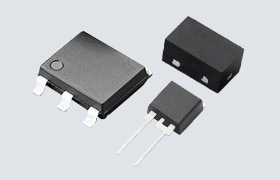
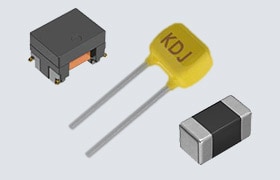
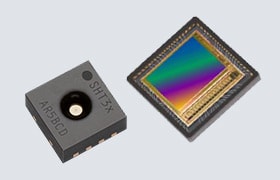
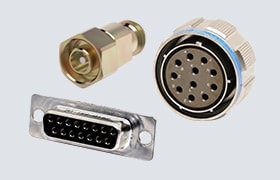
The foundation of digital twinning is the need for robust parts twinning. At this level, the virtual
representations of the individual components give engineers the capability to understand the physical, mechanical,
and electrical characteristics of a part. For example, many computer-aided design/manufacturing (CAD/CAM) solutions
today offer the ability to perform a variety of analyses relating to durability, including static stress and thermal
stress. Electronic circuit simulation software, for example, tells us how electronic components will react as
various electrical signals are injected into a circuit. It requires a mathematical model of sufficient complexity to
be able to best predict real-world behaviors under a variety of scenarios.
Product Twinning
Twinning individual parts offers useful insights but twinning the interoperability of parts as they work together
helps to enable product twinning. Being able to understand how parts interact with each other and their environment
allows for optimization of the constituent parts, thereby maximizing operating characteristics and minimizing things
such as a mean time between failures (MTBF) and mean time to repair (MTTR).
System Twinning
At the next higher level, system twinning allows engineers to operate and maintain entire fleets of disparate
products that work together to achieve a result at a system level. Think of an energy grid that can spin up or spin
down electrical generation by monitoring the demand. Now imagine this possibility across all types of system
families. Groups that build and manage communication systems, traffic control systems, or industrial manufacturing
systems will have an unheard-of ability to monitor and experiment with their systems to achieve unparalleled
efficiency and effectiveness.
Process Twinning
Digital twinning isn’t just limited to physical objects; it can be used to twin processes and workflows as
well. Process twinning empowers the optimization of operations involved in refining the raw materials production of
finished goods. Purely business-focused workflows, even those that still have humans in the loop, would also benefit
from DT modeling, allowing managers to tweak inputs and see how outputs are affected without the risk of upending
existing workflows, which would otherwise cause business to grind to a halt. Process twinning will enable senior
corporate leadership to monitor key business metrics in a much more data-driven manner than has been previously
possible.
Conclusion
Digital twinning is emerging as a hierarchy that includes parts, products, systems, and process twins. The lowest
level—the parts twin—is the simplest, with each subsequent level providing more sophisticated and more
diverse types of information. By taking the lowest level parts and putting them back together, you can build
sophisticated yet comprehensible systems.